

Precision Materials
Boundless
Applications
Focused on innovation and precision processing of advanced polymers and high-performance materials.
Jiangsu Dixiang
Precision processing of specialty polymers and advanced materials
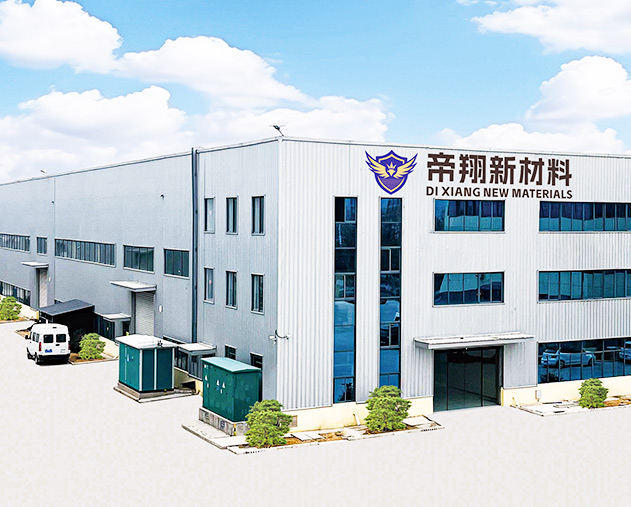
Jiangsu Dixiang New Materials Technology Co., Ltd. is an innovative fiber enterprise specializing in the R&D and manufacturing of advanced yarns, monofilaments, and multifilaments. Integrating R&D, production, and sales, the company focuses on the innovation and deep processing of novel, specialized polymer, bio-based, and high-performance materials. Leveraging professional expertise, we provide high-value-added product solutions for footwear, luggage, webbing, and automotive applications.
The company operates four coating lines capable of deep-processing aramid, high-performance fibers, polyester, nylon, high-tenacity fibers, FDY and DTY dyed yarns, and solution-dyed yarns. Additionally, it is equipped with four specialty monofilament production lines, producing TPU and PA low-melting-point hot-melt monofilaments, elastomeric monofilaments (TPU, TPEE, PEBA, POE), and bicomponent composite monofilaments, while also maintaining processing capabilities for high-performance monofilaments such as PPS, LCP, and PEEK.
Since its inception, Dixiang has been committed to delivering premium processed products, including knitted footwear materials, coated yarns, composite yarns, monofilaments, synthetic fibers, and stretch yarns. To meet diverse client demands, we continuously upgrade our textile technologies, maintain experimental pilot lines for customized services, and provide technical support for client R&D to help enhance product value.
Products
Precision coating · Specialty monofilaments · Composite fibers
-
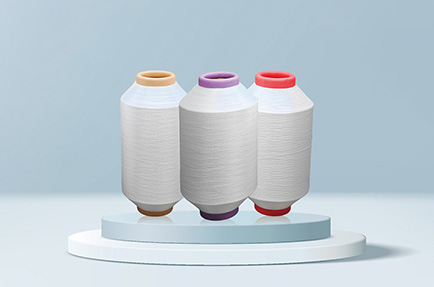
High-Tenacity Yarn
Lighter than TPU monofilament, with improved abrasion resistance, high-temperature resistance, colorability and easy forming.
View more -
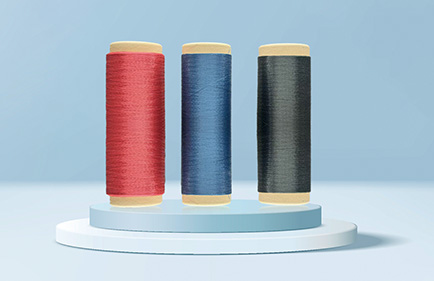
Ultra-Durable Yarn
Controls filament-bundle dispersion at ultra-high strength while improving abrasion resistance and bundle strength.
View more -
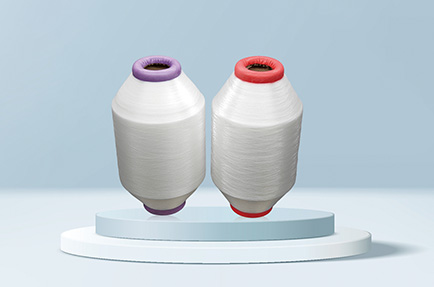
Hot-Melt Monofilament
A fiber made by adjusting polyester or nylon properties, with a melting point adjustable from 80°C to 125°C.
View more -
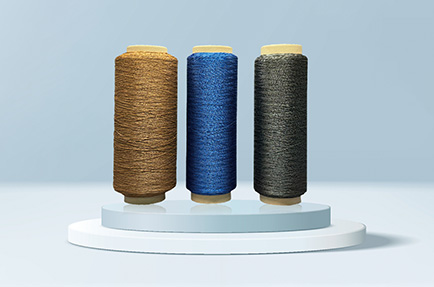
Fine Elastic Yarn
Made with advanced coating technology and high-quality colloids, combining elasticity with functional performance.
View more -
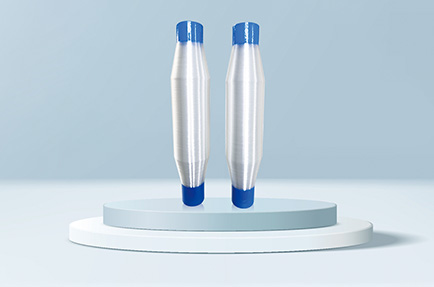
Elastomer Monofilament
Produced from different elastomer materials to provide varied elasticity and meet diverse product requirements.
View more -
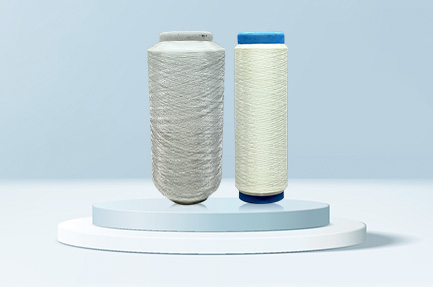
High-Performance Monofilament
High strength, superior abrasion resistance, toughness, weather resistance, flame retardancy and chemical resistance.
View more
Our Advantages
Four polyester lines + four monofilament lines
Reliable delivery of quality products
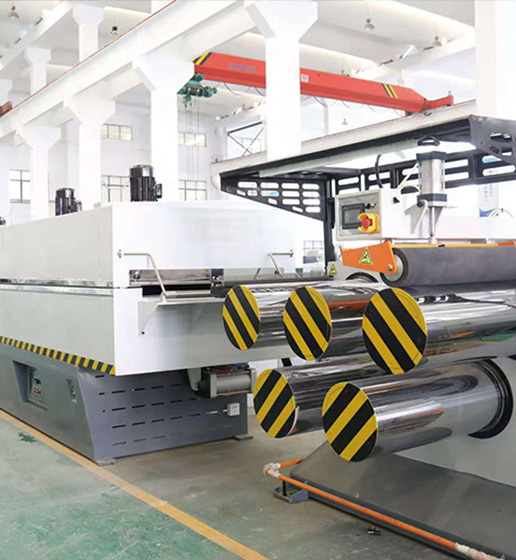


Deep R&D Expertise
Years of experience in specialty polymers and high-performance fibers, supported by complete formulation and process databases.


Complete Production Capacity
Parallel production lines support multiple varieties and specifications while maintaining stable supply and dependable lead times.


Flexible Customization
Pilot lines support small-batch development from material selection and formulation to full-process technical response.


Cross-Industry Experience
Proven applications across footwear, luggage, webbing and automotive materials deliver practical, field-tested solutions.
News
Industry insights and company updates
-

Application Advantages of Hot Melt Monofilament in Footwear Materials
With the rapid development of knitted uppers, heat-pressing and composite processing technologies, footwear manufacturers are looking for fiber materials that can improve bonding, shaping and processing efficiency. Hot Melt Monofilament has become an increasingly useful material in footwear applications because its melting characteristics can be adjusted according to different processing requirements.1. Why Is Hot Melt Monofilament Suitable for Footwear Applications?Hot melt monofilament is produced by adjusting the characteristics of the raw materials and manufacturing process to achieve a specific melting temperature range.Jiangsu Dixiang New Material provides TPU and PA series Hot Melt Monofilaments. According to the company's product information, the melting point can be adjusted according to application requirements, with available products covering approximately 80°C to 125°C and specifications from 30D to 150D.This adjustable characteristic is particularly useful in footwear manufacturing because different upper structures, textile constructions and heat-pressing equipment require different processing conditions.2. Improved Heat-Pressing and Shape-Setting PerformanceIn knitted footwear uppers, the material needs to maintain a relatively stable structure after heat treatment.When the Hot Melt Monofilament reaches its appropriate melting condition, it can participate in bonding and fixing the surrounding fibers. This helps stabilize the fabric structure during heat pressing and shaping.For footwear materials that require dimensional stability and controlled upper geometry, selecting an appropriate hot melt monofilament and processing window can contribute to more consistent forming results.3. Simplifying Certain Bonding ProcessesIn some traditional footwear material applications, additional adhesive materials are required for bonding or fixing.Under suitable processing conditions, hot melt monofilament can participate directly in thermal bonding within the textile structure. This may reduce certain additional adhesive-processing steps and provide manufacturers with another option for simplifying material structures and optimizing production processes.4. Flexible Selection of Melting Point and SpecificationsDifferent footwear applications do not have identical processing requirements. Knitted uppers, webbings and other footwear components may require different melting temperatures, linear densities and processing conditions.Therefore, the value of hot melt monofilament is not simply its ability to melt, but its ability to be matched to a specific application.Jiangsu Dixiang New Material currently offers hot melt monofilaments from 30D to 150D and supports customized specifications and melting points according to customer requirements.
View more -
Upgraded Compliance Requirements for Overseas Orders Push Special‑Monofilament Industry to Improve Material‑verification System
Along with expanding export volume of textile accessories, overseas markets extend control dimensions for special‑monofilament products. Beyond basic physical indicators, restrictions over hazardous substances, weathering‑aging data and batch traceability are gradually included in overseas clients’ audit checklists. Domestic monofilament manufacturers are urged to improve full‑process material‑verification systems, among which Hot‑Melt Monofilament, elastomer monofilament and high‑performance monofilament face prominent compliance constraints.In former export businesses, buyers mostly focused on test reports covering filament diameter, melting point and breaking strength. Current specifications such as EU REACH and OEKO‑TEX put forward stricter control over restricted substances within accessory fibres. Some domestic manufacturers encounter delivery obstacles because of incomplete compliance documents even though product performances meet requirements. Overseas end‑brands also demand practical test data such as accelerated aging and washing resistance rather than theoretical parameters, setting higher standards for domestic new‑material factories.Under such background, some domestic enterprises equipped with pilot‑production lines adjust business patterns, including Jiangsu Dixiang New Materials Technology Co., Ltd. To satisfy foreign‑trade clients, the enterprise integrates incoming‑raw‑material inspection, spinning‑process sample retention and finished‑product simulated‑condition tests into standard workflows. For export‑popular grades such as Hot‑Melt Monofilament, it preserves batch‑corresponding test records to support supply‑chain traceability required by overseas buyers. Beyond mass‑production delivery, it supplies supporting test data and assists downstream export‑oriented webbing and shoe‑material enterprises to pass overseas audits.The industry is moving away from capacity‑oriented competition. Material compliance and practical‑verification capacity become key differentiated factors. Upstream fibre manufacturers shall embed overseas compliance standards into formula design and production control, and complete the whole chain covering raw‑materials, production, testing and document output so as to seize incremental opportunities from global textile industrial chains.
View more -
Expanding Coating Deep‑processing Capacity, Dixiang New Materials Improves Supporting Process Service for Hot‑Melt Monofilament
Many downstream manufacturers find that even if Hot‑Melt Monofilament meets basic specifications, problems such as melting‑temperature drift and bonding‑strength fluctuation may still occur after coating composite procedures and lower finished‑product yield. Relying on four in‑house coating production lines, Jiangsu Dixiang New Materials Technology Co., Ltd carries out process adaptation debugging for Hot‑Melt Monofilament. It combines coating processing with performance verification of Hot‑Melt Monofilament and provides integrated sample‑trial solutions covering raw‑material supply and follow‑up deep‑processing for clients.Tiny changes of extrusion temperature, roller tension and oven temperature during coating may shift the actual melting window of Hot‑Melt Monofilament. Some purchasers only inspect incoming filament materials and overlook performance changes caused by secondary‑processing conditions. Defects including insufficient bonding and local over‑melting are only discovered in finished‑product phase and lead to material waste. Dixiang New Materials moves coating procedures forward into sample‑test verification. For webbing, automotive interior accessories and filter substrates, it tests melting‑point retention, heat shrinkage and peel‑strength variation of Hot‑Melt Monofilament after coating, so as to eliminate processing‑adaptation risks in advance.Supported by internal special‑monofilament pilot lines, the enterprise supports small‑batch sample trials of multiple specifications. It adjusts chip formula and spinning‑cooling parameters for Hot‑Melt Monofilament according to clients’ coating‑equipment working conditions and reduces trial‑and‑error costs in downstream secondary‑processing. Besides standard grades, it also conducts simulated tests for washing resistance and damp‑heat aging for export orders to satisfy environmental‑compliance requirements of overseas supply chains.With refined division within the textile‑accessory industrial chain, merely supplying raw materials can hardly satisfy new‑product‑development demands. Dixiang New Materials builds up collaborative verification links spanning spinning and coating. Instead of only delivering filament bobbins, it provides reference processing parameters to help downstream factories shorten new‑product iteration cycles and give full play to functional‑fiber value.
View more -
Downstream manufacturers evaluate materials from multi‑dimensions.
With the wide adoption of seamless weaving and thermal‑press composite processes, the textile industry keeps advancing. Limitations of traditional glue bonding and sewing edge‑locking emerge gradually. As eco‑friendly bonding fiber, hot‑melt monofilament gains expanding applications in shoe materials, automotive interiors, webbing and filter materials.Downstream manufacturers evaluate materials from multi‑dimensions. Apart from basic bonding performance, melting‑point stability, filament uniformity, washing resistance and aging resistance become vital references for procurement. Different end‑use scenarios set varied requirements for hot‑melt monofilament. Fly‑knit shoe uppers focus on thermal‑setting performance; webbing lace requires soft hand‑feel; automotive interiors demand temperature and aging resistance. General‑grade materials cannot satisfy all working conditions.The industry moves toward scenario‑oriented customization. Many material enterprises build test facilities to support mass supply and small‑batch sampling. Joint process debugging between upstream material suppliers and downstream weaving factories reduces trial‑production loss and accelerates new‑product launch.Industry practitioners mention that buyers should not judge hot‑melt monofilament merely by price. Evaluation shall combine thermal‑press equipment parameters and end‑product service conditions. Manufacturers with sampling and process‑debugging services are preferred. Small‑scale trial before mass production helps maintain good‑product rate. Formulation customization for specific end‑use scenarios will be a key development trend for hot‑melt monofilament.
View more